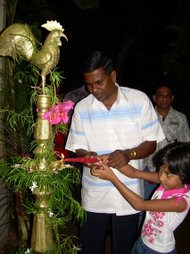
"Star Lanka Online" Our NEW Web site And Web TV Channel Launched

TFGE , The Future Global Educational Center Has Launched
the official web site, called
*** Star Lanka Online Dot Com ........................

www.starlankaonline.com will be completed in very near future....

*** Star Lanka Online TV Channel,..................

Just One Click ahead ...

Now you can watch "Star Lanka Online TV" channel broadcasts from Matara, Sri Lanka in most part of the day. Still we are keeping a test transmission also. There is a link right side of your hand to watch our TV channel. You can watch (Click On the Box) live channel on this site without going to another site to watch the TV. and also recorded parts, following the below link.

Place your Own Ad Here

Wednesday, September 17, 2008

World's shortest man meets leggiest woman

World's shortest man, leggiest woman meet

By NANCY ZUCKERBROD

LONDON - Trafalgar Square routinely serves as a stage for mimes, jugglers and other acts, but the tourist attraction drew an exceptionally curious crowd Tuesday when the shortest man who can walk met the woman with the longest legs.

He Pingping from Inner Mongolia, China's autonomous region, the world's smallest man sits underneath Svetlana Pankratova from Russia, the Queen of Longest Legs, as they pose at Trafalgar Square in  London, Tuesday, Sept. 16, 2008. Pingping, born with primordial dwarfism, holds the Guinness World Record for the smallest man at 74.61 cms (2 feet and 5.37 inches) and Pankratova holds the Guinness World Record for the longest leg of any woman at 132 cms (4 feet 4 inches) in length. (AP Photo/Sang Tan)
AP Photo: He Pingping from Inner Mongolia, China's autonomous region, the world's smallest man sits underneath Svetlana...

He Pingping, of China, was born with a type of dwarfism. He, 20, stands precisely 2 feet 5.37 inches tall.

The pair met to publicize the release of "Guinness World Records 2009." This year's version of the popular book is due out Wednesday.

He called Svetlana Pankratova's legs "very beautiful."

Pankratova, 36, who is Russian but lives in Spain, has legs that are nearly 52 inches long, or more than 4 feet long. Her upper body has nearly typical proportions, giving her a giraffe-like appearance.

Dressed in a bright-blue mini-dress and low-heeled pumps, Pankratova, 36, said she liked her legs, though they can complicate things. "It's hard to find clothes, especially pants," she said.

At just over 6-foot-4, Pankratova isn't the tallest woman on record. Sandy Allen, of Shelbyville, Indiana, who died recently, held that title at 7 feet, 7 inches, according to the book. The book said He is the shortest man who can walk.

The latest edition of the book lists pop star Britney Spears as the most-searched person on the Internet and the television show "Lost" as the most-downloaded show of all time.

The book has been around for half a century. About 3.5 million copies are sold each year, according to editor-in-chief Craig Glenday.

___

On the Net:

Guinness World Records:

http://www.guinnessworldrecords.com/


**************Watch This Video, Click Here..............................

Baggy pants ban in US,>> MUST DO IN Sri Lanka Tooo...

Baggy pants ban "unconstitutional," rules US judge-MUST DO IN Sri Lanka Tooo......

MIAMI (AFP) - A Florida judge has deemed unconstitutional a law banning baggy pants that show off the wearer's underwear, local media reported Tuesday.

A US youngster wearing his pants "half-mast." A Florida judge has deemed unconstitutional a law banning baggy pants that show off the wearer's underwear, local media reported Tuesday.(AFP/File/Tim Sloan)
AFP/File Photo: A US youngster wearing his pants "half-mast." A Florida judge has deemed unconstitutional a law...

A 17-year-old spent a night in jail last week after police arrested him for wearing low pants in Riviera Beach, southeast Florida.

The law banning so-called "saggy pants" was approved by city voters in March after supporters of the bill collected nearly 5,000 signatures to put the measure on the ballot.

The teen would have received a 150 dollars fine or community service, but he spent the night in jail due to a history of marijuana use, the Palm Beach Post newspaper said.

"Somebody help me," said Palm Beach Circuit Judge Paul Moyle, before giving his decision.

"We're not talking about exposure of buttocks. No! We're talking about someone who has on pants whose underwear are apparently visible to a police officer who then makes an arrest and the basis is he's then held overnight, no bond."

"Your honor, we now have the fashion police," added public defender Carol Bickerstaff, who asked the law be declared "unconstitutional."

The judge agreed with Bickerstaff immediately, reported the Post.

Laws that ban low-slung pants are on the books in several US cities, including Delcambre, Louisiana, where offenders can be fined up to 500 dollars or jailed for up to six months.

Dallas, Texas and Atlanta, Georgia are among the larger US cities considering similar measures.


Tuesday, September 16, 2008

Is the scenic Kolonnawa wetland heading for an ecological disaster?

Drowning in dirt

Is the scenic Kolonnawa wetland heading for an ecological disaster?

Kumudini Hettiarachchi reports
For The Sunday Times .LK

The Parliament, the seat of Sri Lanka’s legislature in Sri Jayewardenepura-Kotte, nestles against lush greenery and is ensconced on the beautiful shimmering waters of the Diyawanna Oya. This is the country’s icon in a spectacular setting.

But is this just a mirage? Is Parliament surrounded by the Diyawanna Oya which is hydrologically linked to the Kolonnawa wetland, sitting on a biological time-bomb, slowly and surely ticking its way to an ecological disaster?

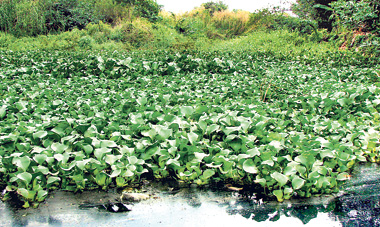
Invasive species of noxious vegetation, algae and fish are taking over the Kolonnawa marsh, covering about 214 ha, and to cap it all the water quality has dropped, with faecal coliform being found in abundance.

This is what has been uncovered by researchers from three organizations who have fanned out across the Kolonnawa marsh, not only on foot but also by boat, and collected data, water samples and carried out interviews of 175 households in the “fringe area” and 50 households in the “basin” between August 2007 and June 2008.

The filling of marshy land beyond Kolonnawa is happening mostly by private owners and the Sri Lanka Lowland Reclamation and Development Corporation (SLLRDC) has to a great extent been able to protect state land. Now rather than land-filling the major problem is pollution and not industrial pollution but from households, says researcher and Environmental Engineer, Missaka Hettiarachchi, from the Moratuwa University.

The research indicates that pollution-indicative invasive weeds such as pond apple (Annona glabra) and Japan Jabara or water hyacinth (Ipomia crassipes) have ousted characteristic freshwater marsh vegetation including rushes, sedges and grasses, The Sunday Times understands.

The researchers have just written an eye-opening draft report on ‘The situation analysis of water services in the Kolonnawa marsh’. The research has been carried out with a grant from the International Foundation of Science, Sweden and technical support from the Central Environmental Authority (CEA), the SLLRDC, the Urban Development Authority (UDA) and the Irrigation Department.

The Women for Water Partnership, Netherlands, has co-funded part of the field work. The eco-hydrology of the marsh was studied by the Department of Chemical and Process Engineering, Moratuwa University, with the principal researcher being Mr. Hettiarachchi and the senior supervisor Prof. Ajith de Alwis. The ecological, gender and sociological aspects were covered by Dr. Deepthi Wickramasinghe of the Department of Zoology, University of Colombo; Kusum Athukorale of the NetWwater – Sri Lanka; and freelance researcher Ravi Peiris respectively.

Mr. Hettiarachchi explained that tropical freshwater fish such as murrel and stinging catfish in the deep-water areas of the marsh have more or less become extinct, with pollution-resistant exotic invasive fish like thilapia, kissing gourami and knife fish taking their place. The comparative study is being done with data collected under a 1994 Wetland Site Report produced by the CEA.

With regard to the proliferation of faecal E-coli, Mr. Hettiarachchi says that the World Health Organization standard for any water area which has human activity or even where people engage in recreational activity is a maximum count of 1000 units per 100 ml. “Water quality observations taken from four points in the marsh indicate an average of 2,800 at certain points and a shocking maximum of 50,000 units per 100 ml,” he says, stressing however that the marsh water is not used for human consumption as most people have pipe-borne water. The wetland is also not used for bathing, swimming or pleasure boating although some youth engage in fishing and excursions.

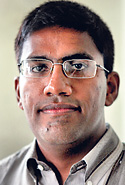
Missaka Hettiarachchi

Explaining that only 75% of the research has been completed, Mr. Hettiarachchi says there are indications that pollution of the Kolonnawa marsh may be reducing the capacity of this wetland to act as a “flood detention” area while also being a health hazard to people. This wetland marsh “detains” or collects flood waters from the metropolitan and suburban areas and drains them, preventing the flooding of Colombo city.

Pointing a finger at the invasive weeds, this environmental engineer says that although the impact has not been calculated yet, they critically damage the hydraulics of the wetlands, as these terrestrials with their large root system capture silt which in turn could cause the filling up of the wetland. They also block the canals and small waterways. Nutrient enrichment, especially nitrogen, phosphate and potassium, of the marsh caused by the pollution has led to the rapid growth of algae, making the water green.

The algae which produces oxygen during the day through photosynthesis (making of food) consumes oxygen in the night. This could restrict the oxygen available for the usual vegetation and fish in the marsh area, killing them off, he says.

On the health aspect, The Sunday Times learns that 35% of the households surveyed had health problems such as typhoid, chikungunya, dengue and leptospirosis (rat fever). Further study, however would be needed to firmly establish a link.

There is a National Wetland Policy and a National Wetlands Steering Committee. The institutional infrastructure and legislation are in place. What is needed is to get together and work out a solution to the pollution, adds Mr. Hettiarachchi, so that the rapid degradation of the marsh is halted immediately.
Otherwise, the Kolonnawa wetland may die destroying not only the stark beauty of a marsh but also the unique eco-systems fostered by it.

How does pollution occur?

The pollution is mainly by residential waste-water, sewage and also solid waste, the research has found.

  • Direct and indirect disposal of waste-water and sewage into the wetland.
  • In some instances, especially among the low-income households, direct dumping of solid waste.

Getting into the intricacies, Mr. Hettiarachchi explains that as the fringe area of the wetland has a high water table, the soakage pits for faecal matter built in homes tend to either directly overflow into the marsh or indirectly due to seepage, making the area nutrient-rich. “The septic tank and soakage pit system does not work under flood conditions,” he says adding that it usually works only if there is a good layer of soil to act as a strainer, leaving the contaminants behind and sending only the water sans the bacteria to the soil.

The answer, of course, would be to revamp the sanitation system by introducing anaerobic filters or “eco-san” (ecological sanitation) dry toilets, The Sunday Times learns.

In the first process, the effluents would pass through a filter system where anaerobic bacteria would breakdown the contaminants while in dry toilets the solid faecal matter is not flushed with water but sent into a dry pit along with ash. The dry faecal matter gets composted with time and could be used in horticulture, he says.

Animal lover Austin Stevens takes on Lanka’s ‘most dangerous’

Animal lover Austin Stevens takes on Lanka’s ‘most dangerous’

By Chitral Jayatileke

Among the many wildlife TV programmes we see on “Animal Planet”, some are truly memorable because of the natural flair of the presenter. Austin Stevens’ “Most Dangerous” show has long been one of my favourites. Viewers never fail to be amazed by Austin’s extraordinary way of handling some of the world’s most venomous reptiles.

Austin Stevens braves the wilds as he goes in search of his subjects.

He was in Sri Lanka last month to make a documentary about elephants for the Discovery and Animal Planet TV channels and the Nature Odyssey team of ground-handling specialists at Walkers Tours had the privilege of working with him.

We scouted the Minneriya National Park and tracked elephant movements on the plains of the Kalawewa.

The TV programme’s natural style meant that Austin had to approach the elephant herds on foot.

This risky and challenging task was efficiently managed, with some herds just outside the national parks. The team spent 14 days on location, and was based at the Cinnamon Lodge.

Austin’s natural ability with animals, including an aggressive rat snake and a five-foot cobra, was demonstrated on several occasions during the long shoot. When it comes to handling reptiles, Austin is like no one else I have seen. He is a genuine lover of snakes. His deep respect for all animals is obvious.

There were a few heart-stopping moments. On one occasion, while on foot, we encountered 30 wild elephants off Kekirawa.

Close encounter with a jumbo

Then we had visits from a cobra and a venomous krait. And on another occasion, our vehicle bust a tyre when we were deep in the wilderness, surrounded by wild elephants.

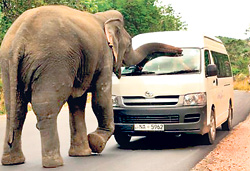
A long encounter with a wild elephant that visited a wayside shop in Minneriya was a huge hit with the crew.

Finally it was off to Kandy to see the Esala Perahera where Austin Stevens and his crew were overwhelmed by the pomp and glory of the pageant. The programme on Sri Lanka’s elephants will be telecast on Animal Planet in November.

It’s all there, the fun, culture and cuisine

It’s all there, the fun, culture and cuisine

By Dhananjani Silva in Hong Kong
Sunday Times.LK

A myriad of exciting attractions for everyone - both young and not so young; spectacular sights, endless shopping, fun getaways and tempting international cuisine. That in a nutshell would describe Hong Kong, which is an amazing experience as a tourist destination.
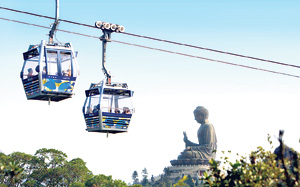
Panoramic view from the The Ngong Ping cable car

And it seems more and more visitors are discovering Hong Kong’s charms. According to figures released by the Hong Kong Tourism Board as at July 31 this year, visitor arrivals to Hong Kong in the first half of 2008 have grown by 8.9% to 14, 185,504.

On a recent media familiarization tour of Hong Kong we were treated to a seemingly endless variety of things to see and do in Hong Kong. Picking the best would no doubt be an arduous task but here are some of the ‘must-see’ attractions for prospective visitors.

Ngong Ping 360

The Ngong Ping 360 cable car ride between Tung Chung and Ngong Ping cable car terminals is a breathtaking journey, that takes you to an exciting Chinese-style cultural village. Ngong Ping 360, as the name suggests affords a spectacular all-round view of the beautiful landscapes, the flora and fauna of the North Lantau Country park, Tung Chung bay, South China sea, the Hong Kong International airport and the world’s largest outdoor seated Tian Tan Buddha statue. Covering about 3.5 miles, this cable car ride, which takes about 25 minutes, is considered the biggest cable-way in Asia.

Set against beautiful Chinese architectural designs and landscaped gardens, the Nong Ping Village built on a 1.5 hectare site itself is a great experience with several themed attractions such as Walking with the Buddha - a multimedia audio-visual experience depicting the life of Siddhartha Gauthama and the Monkey’s Tale Theatre based on an animated Jathaka fable, Nong Ping Tea House that promotes Hong Kong’s traditional tea culture and has Chinese tea demonstrations and Ngong Ping Nature Centre which provides an insight into the Ngong Ping environment, the vegetarian restaurant and a range of themed souvenir outlets.

Situated in the Ngong Ping village is also another cultural attraction - The Po Lin Monastery and the Giant Buddha blessed and built in 1993. The serene tranquil atmosphere in the Po Lin Monastery makes it conducive for meditation while the majestic giant bronze Buddha weighing 202 tonnes located on the Lantau peak adds much to the spiritual beauty of the compound.

Hong Kong Disneyland

Hong Kong Disneyland is yet another focal tourist point located on Lantau Island. It consists of four theme lands, Adventure land, Fantasyland, Main Street USA and Tomorrow land.
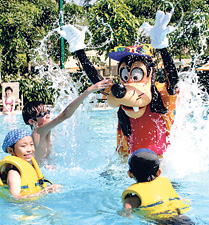
A splash of a time with a Disney character

The park features a wide range of attractions from grand musical parades of Disney characters, elaborate castles and lively pageants, fireworks, adventurous Disney train rides through the theme jungle, thrilling boat cruises, 3G animated magical orchestra, an enchanted boat ride around the Small World of colourful dolls, Disney characters, elaborate sets and musicals among a wide range of other treats.

Also in Lantau Island are the Disneyland hotels – the Victorian style family hotel, Hong Kong Disneyland Resort and the Hollywood type of Disneyland Hollywood Hotel all beautifully designed according to the Disney theme.

Peak Tram

The Peak Tram -known as the pride of Hong Kong is yet another major tourist icon in Hong Kong as it provides a breathtaking view of the Hong Kong city and beyond including the world renowned Hong Kong skyline. The most scenic transport route in the city, this cable pulled tram which travels between Central and the Peak takes the people up an incline so steep that buildings look like they are leaning at a 45 degree angle.

Hotels, restaurants and shopping malls

With shops, hotels, restaurants, and boutiques located at every street and corner of the City, Hong Kong is a hub of activity. Hong Kong’s largest hotel Regal Airport, which has a total of 1,171 sophisticated bedrooms with all modern facilities is directly linked to the Hong Kong airport terminal. Among the various state of the art facilities this five star hotel offers are the 31 various sized meeting rooms to suit the demands of conferencing needs. Beautifully designed with classy furniture is the Regal Kowloon Hotel located in the heart of Tsimashatsui.

A hotel with a 95% occupancy rate it consists of 600 luxurious rooms and 38 suites. A visit to the giant floating Chinese restaurant in Aberdeen Harbour proved a unique dining experience in terms of food, service and presentation. Let alone the wide range of mouthwatering delicacies, the magnificent floating structure designed in the form of a ship and its equally sophisticated interior has a café, conference, banquet facilities, cultural attractions, a cooking academy and exhibits.

For those who wish to indulge in a great shopping spree, the Harbor City is one of the largest shopping malls in Hong Kong located in an extensive area of 2 million square feet with over 700 shops, 50 F&B outlets and some five cinemas. And if you’re a bargain hunter, checkout the busy night market streets to grab amazing products at remarkably low prices. The Ladies Market in Tung Choi Street is the ideal spot for handbags, accessories, shoes, men’s and children’s wear and toys. Going around the city is quick and hassle- free with the highly developed transport system, be it by bus, tram, MRT or taxi.

Our group of journalists also visited the CX City- Cathay Pacific headquarters which was constructed in 1996. There is also the Cathay museum where the early Cathay Pacific uniforms from 1946- 1999 and information on the Douglas DC 3-the first Cathay Pacific aircraft are exhibited. The CX city also consists of well designed flight safety training centres and mock up centres. The writer was on a Cathay Pacific media tour to Hong Kong

Peak back in time

In the early days (1880) most people were transported from the Peak by a frail bamboo chair supported by two strong coolies. This was the most popular mode of transport until in 1881, an enterprising Scotsman sought approval from the Governor for a tramway running between the Garden Road and Victoria Gap at the Peak.

The tram was officially opened in May 1888. Between 1908 and 1949, the first two seats of the tram were permanently reserved for the Governor. Until 1926, there were three classes on the tram and the first was reserved for government officials and Peak residents, second class for policemen and soldiers, and the third for domestics of the Peak residents. The 49-year-old peak tram is now on display at the Peak Pizza.

A Disney treat

Cathay Pacific is offering a special Disneyland package for the Disney Hotels until December 20, where those purchasing three packages will be eligible for a fourth package free. Disneyland Resort & Disney's Hollywood hotels are the hotels on offer. However, passengers have the option of choosing a Disney Hotel and a Hong Kong hotel as well.

Included in the two-night, three-day packages are return air tickets to Hong Kong on economy class, hotel accommodation on room only basis, Disneyland stay & play ticket which offers a two day park ticket for a day’s price, one extra magical fast pass ( one time use for express entry to any fast-pass attractions anytime during the day ) etc. One character breakfast at Enchanted Garden for passengers staying at Disneyland hotel and late check-out in Disney's hotels are among the other benefits included in the package.

More details can be obtained from Cathay Pacific Airlines on 2334145 or from your travel agent.
Cathay flies daily to Hong Kong, three days via Bangkok, four days via Singapore.

Accelerate your Internet Speed by Five Times

Accelerate your Internet speed 5 times
There is a software to accelerate browsing internet speed for Internet Explore/ Fire Fox. I tried with that I think something happening with the speed. Try and enjoy watching below video and If that happen, please inform us your as a comment on the blog. Share your experiences.

Thursday, September 11, 2008

Full list of MTV Winners 2008

Full list of MTV Winners

Rihanna

Nominated ... Rihanna is up for a bevy of MTV awards / Reuters

The 2008 MTV Video Music Awards will take place on September 7, 2008 live from Hollywood, at the Paramount Pictures Studios.

All videos eligible for nomination made their appearance on MTV between July 1, 2007 and June 30, 2008.

Full coverage: Get all your MTV action, gossip and red carpet pics in our music awards section

British comedian Russell Brand hosts this year’s awards with special appearances by nominees including the Jonas Brothers, Kanye West, along with Christina Aguilera and other top acts performing live throughout the night.

Britney Spears returns to the 2008 MTV VMA stage after a memorable performance at last year's awards with three nominations.

Chris Brown looks set to sweep the awards after bagging a staggering seven nominations.

The Pussycat dolls scored six and Katy Perry will be vying for five awards after the success of her single I Kissed a Girl .

American favourites the Jonas Brothers scored two nominations, as did Kanye West and Rihanna.

WINNERS HIGHLIGHTED IN RED:

Video of the Year ******************
Chris Brown - “Forever”
Jonas Brothers - “Burnin’ Up”
Pussycat Dolls - “When I Grow Up”
Britney Spears - “Piece of Me”

The Ting Tings - “Shut Up and Let Me Go”

Best Male Video
Chris Brown - “With You” *************
Flo Rida (featuring T-Pain) - “Low”
Lil Wayne (featuring Static Major) - “Lollipop”
T.I. - “No Matter What”
Usher (featuring Young Jeezy) - “Love in This Club”

Best Female Video
Mariah Carey - “Touch My Body”
Katy Perry - “I Kissed a Girl”
Rihanna - “Take a Bow”
Jordin Sparks (featuring Chris Brown) - “No Air”
Britney Spears - “Piece of Me”

Best New Artist
Miley Cyrus - “7 Things”
Katy Perry - “I Kissed a Girl”
Jordin Sparks (featuring Chris Brown) - “No Air”
Taylor Swift - “Teardrops on My Guitar”
Tokio Hotel - “Ready, Set, Go!”

Best Pop Video
Danity Kane - “Damaged”
Jonas Brothers - “Burnin’ Up”
Panic at the Disco - “Nine in the Afternoon”
Britney Spears - “Piece of Me”
Tokio Hotel - “Ready, Set, Go!”

Best Rock Video
Fall Out Boy (featuring John Mayer) - “Beat It”
Foo Fighters - “The Pretender”
Linkin Park - “Shadow of the Day”
Paramore - “Crushcrushcrush”
Slipknot - “Psychosocial”

Best Hip-Hop Video
Mary J. Blige - “Just Fine”
Lupe Fiasco (featuring Matthew Santos) - “Superstar”
Flo Rida (featuring T-Pain) - “Low”
Lil Wayne (featuring Static Major) - “Lollipop”
Kanye West (featuring Chris Martin) - “Homecoming”

Best Dancing in a Video
Chris Brown - “Forever”
Danity Kane - “Damaged”
Madonna (featuring Justin Timberlake and Timbaland) - “4 Minutes”
Ne-Yo - “Closer”
Pussycat Dolls - “When I Grow Up”

Monday, September 8, 2008

THE HISTORY OF EGYPT

THE HISTORY OF EGYPT

***** Lakbima News

About 5,000 years ago, a remarkable way of life, or civilization, grew up along the banks of the Nile River in Egypt. It flourished for over 3,000 years, longer than most other civilizations in the world’s history. Egypt is among the most influential of Arab states. It lies between Africa and the Middle East. This ancient country holds a history of over 6,000 years and has many exciting attractions for travelers.

EGYPT’S CREATION

Egyptian history begins around 3300 BC. This was when the Egyptians finally had enough symbols in their writing to record history. From 3100 BC inscriptions created a way for later Egyptians. It was also the time when the pharaoh, King Menes, created Egypt by uniting the two parts of Egypt, also known as Upper and Lower Egypt, into a single kingdom. He started Memphis in the north and Abydos in the south as his capital cities. A series of strong and able rulers established a well organized government. The calendar was introduced during this time and the sun-god Re was the most loved god-figure. Over time, authority began to disappear and Egypt was controlled by foreign princes. These rulers introduced the horses and chariots to Egypt.

EGYPT REIGNS

After many failed dynasties and deaths of great rulers, a time span of more than 400 years, power moved into the hands of priests and the empire declined. The dynasties became so weak, that Alexander the Great had no problem taking over Egypt. Although he did not spend much time in Egypt, his capital city of Alexandria, where he is believed to be buried, is to this day very successful. His empire was divided among his generals and this Greek dynasty ended with the reign of Cleopatra VII. She ruled jointly over Egypt with her son from their city of Alexandria in Lower Egypt, which became a world center of Greek culture. For over 300 years Greek-speaking pharaohs ruled Egypt, then Egypt became a province of Rome. A division of power resulted in the abandonment of Egypt. Many foreign countries came in and took over Egypt for short times. After many years of hard work and wars, Egypt finally became its own independent country with a President.

THE NILE RIVER

No other civilization in the time of the pharaohs could compete with Egypt’s magnificent buildings, its wealth, or its long centuries of peace. To a large extent, this is because other civilizations did not have Egypt’s main advantage – its great river. For tens of thousands of years the focal point of Egyptian life has been the River Nile. Egypt is correctly said to be the gift of the Nile and Egypt’s two most important areas are the Delta and the Nile Valley.
The Nile Delta is the heartland of Egypt. The ancient Egyptians believed that the waters of the Nile came from a “mysterious heaven of plenty”.
All of Egypt depended on the Nile for water, food, and transportation. The need to maintain irrigation channels as well as the convenient transportation that the river provided were some of the reasons Egypt was the first country in the world to have a national government. The availability of this unlimited supply of water allowed the creation of a society which produced the wonders of ancient Egypt.

PHARAOHS

Pharaoh simply means “the one who lives in the palace”. Egyptians addressed their pharaoh as though he were a god with several forms.
They thought he was more than human and addressed him with the names of several gods. The pharaoh’s most godlike names were “son of Re” and “giver of life like Re”. The Egyptians believed that no single name could express the greatness of their ruler. They also believed by serving the gods, the king helped the sun to rise every morning and helped the Nile to flood at the end of each summer.
They believed that in return for the offerings of food and water that only the pharaoh could make, the gods would feed the souls of the Egyptians after death. The pharaoh’s power was almighty and unquestioned. As a matter of fact, just touching the pharaoh’s crown or scepter, even accidentally, carried the death penalty. The pharaoh’s chief duty was to build and maintain temples to the gods.

PYRAMIDS

The buildings of Egypt that will impress you the most are probably the pyramids. All of them were built to contain the tombs of pharaohs. So far, 46 pyramids have been found.
Others may still be discovered, lying in the ruins, under the desert sands. In the 27th century BC, the first pyramid was built and pyramids became the most popular way to bury royalty. It is the pyramids themselves that make Egyptian archeology so exciting.
One reason why the pyramids were so fascinating was that they were the earliest buildings ever to be made by precisely cutting and putting together great blocks of stone. In stonework, Egypt led the world for more than 2,000 years. The Egyptians believed that a dead person’s soul still needed the dead body and special objects buried with it in order to survive after death. They knew that the dry desert preserves things well, and they chose burial places there that are often well preserved today. Important Egyptians were wealthy enough to build magnificent tombs and furnish them richly with treasures, inscriptions, paintings, and statues. One of the most famous pyramids is the Great Pyramid of Khufu. It has 2,300,000 blocks and each block in the pyramid weighs 2.5 tons.

From - www.interoz.com

The Land of Serendipity at Tokyo National Museum

The Land of Serendipity at Tokyo National Museum

Special exhibition of Sri Lanka’s cultural heritage:

Cultural Heritage of Sri Lanka - The Land of Serendipity - More than 2000 years of our cultural heritage with seven world heritage sights. For the first time Sri Lankan Cultural Heritage is being exhibited in Japan on large scale.


Sri Lankan officials with top executives of the Yomiuri Group

The then National Heritage Minister late Mr. Anura Bandaranaike at a discussion with Yomiuri executives

Former Japanese Ambassador to Sri Lanka Akio Suda completed his mission in Colombo after nearly 3 years in July 2006. He was a man who loved the culture and archaeology of Sri Lanka. He had a very cordial relationship with late Minister Lakshman Kadirgamar when he came to know to introduce Sri Lankan heritage to the world. On July 21 2006, a Sayonara reception was hosted by the out-going Ambassador at his residence at Maitland Crescent.

He made the following remarks during his speech “We have made significant progress and achievement in our assistance works for the development of Sri Lanka, the reconstruction of the war affected North and East, also relief and recovery from Tsunami disaster. We have further promoted our cultural exchanges such as annual Bunka Award ceremony, exhibitions of Japanese arts and culture and the planning of a great Sri Lankan cultural exhibition in Tokyo which is scheduled to be held in January 2008. I was also very happy to be able to cooperate with many Japan-Sri Lanka related Sri Lankan civil organisations which are tremendously active in social, cultural, educational and industrial programs thus contributing such to communities.”

Ambassador Suda approached the Yomiuri Group in Japan through a friend who is a key person in Yomiuri, to sponsor the event. It was a difficult task and Suda left Colombo. It was a silent agenda due to difficulties in finding funds and sponsors. Minister of National Heritage late Anura Bandaranaike visited Japan from May 10-17 2007 with the blessings of the President.

The Minister made an effort to arrange a meeting with Yomiuri Group through our Sri Lankan Mission in Tokyo. It was learnt President of the Yomiuri would not attend the meeting. With the help of former Prime Minister of Japan Yasuo Fukuda we were able to have a very successful meeting with President of the Yomiuri, now Chairman Takuo Takihana. They agreed to become the main sponsors. Also they wanted to send a team to Colombo to reinitiate the event.

Yomiuri Groups flagship newspaper the ‘Yomiuri Shimbun’ was founded in 1874. In 1951 started the radio. Television channel started in 1953. Yomiuri Group is a media conglomerate which includes two newspapers with the largest circulation in the world. Nipon Television Network (NTV) is a leading television network with 30 stations in Japan. Yomiuri Giants professional baseball team of the major league home base at Tokyo Dome, Kawasaki soccer team. Tokyo Verdy soccer team are also in the group. Yomiuri World Theme Park is a popular place among Japanese and Yomiuri Land contains racetracks for horse and motorcycle racing, golf courses, amusement parks and recreation complexes.

The team arrived in Colombo, Nobuyasu Takayama Chief Producer - Cultural Promotion Department, Masatoshi Iwata - Producer Culture Promotion Department of the Yomiuri Shimbun and Masaru Kashima - Supervisor, Education Curator, Yoshihide Koizumi - Department of Cultural Properties Curator, South Asian Art to Tokyo National Museum.

They had a meeting with the Minister National Heritage at “Sethsiripaya” on May 28, 2007. Visiting Japanese team led by First Secretary, Cultural & Information of Japanese Embassy in Colombo. Takashi Ato., officials of the National Museum and Department of Archaeology, were present at the meeting.

The team visited the places and selected the artifacts to exhibit as suggested earlier. Of course there were many speculations to take The Holy Tooth Relic or last Kings Throne to highlight the event.

Everyone understands there are difficulties to fulfill every task within a short span. Last month again Iwata of the Yomiuri Shimbun, Koizumi of Tokyo National Museum and a expert from Nippon Express handling agents arrived here. With their inspection all the artifacts and the replicas were packed with the help of Archaeology Department officials and Ace Cargo then dispatched the artifacts from Colombo on August 29 after a very tight schedule. Araki Ambassador, Embassy of Japan in Sri Lanka, Takashi Ato, First Secretary and Kiichiro Iwase of Ministry of Foreign Affairs of Japan have been great pillars of support. The assistance given by Ranjith Uyangoda the Ambassador and Mrs. Chamari Rodrigo First Secretary of Sri Lanka Embassy in Tokyo to showcase our heritage has been tremendous.

Without the President’s grace and Cultural Affairs and National Heritage Minister’s guidance this event would not be a success.

Director General Archaeology and Director National Museum with their officials and members of the Ministry have worked tirelessly on a demanding schedule to portray Sri Lanka as a country with a rich cultural background. The official opening is on September 16, 2008.

Prime Minister Ratnasiri Wickremanayake, the Minister of Cultural Affairs and National Heritage Mahinda Yapa Abeywardena, the Minister of Foreign Affairs Rohita Bogollagama, Deputy Minister of Tourism Faizer Mustapha will grace the occasion. Secretary to the Prime Minister Mahinda Bandusena, Secretary Ministry of Cultural Affairs and National Heritage G. L. W. Samarasinghe, Director General Archaeology Dr. Senarath Dissanayake, Director National Museum Dr. Nanda Wickremasinghe and the Chairman of the preparation committee of exhibition Prof. P.L. Prematilake will join the delegation.

It will be opened to the public from September 17 to November 30, 2008.

Venue: Hyokeikan, Tokyo National Museum in Ueno.

Hours: 09.30 to 17.00 Sat., Holidays until 18.00, Fridays until 20.00 last entry 30 min. before close. Closed on Monday and the day after a national holiday.

The organizers are Tokyo National Museum, The Yomiuri Shimbun, Ministry of Cultural Affairs and National Heritage with support of Ministry of Foreign Affairs of Sri Lanka and a grant of Japan Foundation, and the co-operation of SriLankan Airlines.

This is a rare opportunity for Sri Lanka to showcase her rich cultural heritage that is over 2000 years old. Over the last two decades there has been talk only of war and terrorism.

This exhibition will tell the world about Sri Lanka’s proud heritage, and show an insight to the fact that Sri Lanka is not a war zone but truly a Paradise island.

Fatal Kindness! As the elephant at the Udawalawe National Park ..........

Fatal Kindness!

As the elephant at the Udawalawe National Park caught sight of us, it sauntered near the electric fence and thumped its right fore limb on the ground. It was a sign of asking for sugarcane near the wayside stall on the opposite side. Even though sugarcane and leaves can be easily digested by an elephant, sweetmeats such as 'kavum' and 'kiribath' cannot be. But the practice of feeding them with these is commonplace.

Elephants nowadays have a keen sense of taste and are willing to eat food that is given by humans instead of tiring themselves in finding food. Though some may think that it is meritorious to feed elephants,more often than not it is bad for these animals.

The tragedy of an elephant falling sick and dying due to high consumption of sweetmeats has been an eye-opener for us to stop feeding elephants with such food. Dr. Ashok Dangolla, who investigated the recent death of the privately-owned elephant from Mawanella says "it is very difficult for the elephant's digestive system to breakdown the starchy food like 'kiribath' and 'kavum' that was given to it". He explained that the incident took place during the traditional water-cutting ceremony after the Esala Perahera conducted by the Dalada Maligawa, Kandy where thousands thronged to 'purify' themselves in the Holy Water after making vows and religious rituals.

They brought delicious sweetmeats and fed the elephants who were participating in the perahera. "When an elephant consumes food rich in carbohydrates, its stomach becomes bloated making it look obese and once they get used to the sweet food given by humans, they make it a habit of asking for it", explained Dr. Dangolla.

He further stated that it is not only at the Dalada Maligawa's Esala Perahera that such incidents can take place, but also at various temples such as Ruhuna and Kataragama around the island that have traditional peraheras.

Dr. Suhada Jayawardena of the Elephant Transit Home in Udawalawe explained that research was done on the eating habits of elephants "for example, we mixed margosa oil in cucumber to prevent elephants from eating such vegetables which are hazardous to their health". He said that because of the smell of oil, elephants wouldn't even touch them.

Favourites like 'kithul' bark and sugarcane have been in their diet for years. But today people eargerly wait to give elephants sweetmeats as a way of attracting these giant animals. "The action we must take is to stop feeding the elephants because it will develop into a pattern.

If their needs are not met, they are likely to get agitated like wild elephants", he said. Dr. Neshma Kumudini, an elephant researcher also said that people have to understand that feeding elephants with food normally consumed by humans is not a good thing and they should be careful especially when elephants make a fuss. "At the Udawalawe National Park, visitors who feed elephants are at the risk of being attacked due to the fact that the electric fence is charged at night and not during the day" she warned.

"Domesticated elephants like those at the Pinnawela Elephant Orphanage have been trained to eat food that are healthy and easily digestible; so feeding them the right diet is acceptable", said Dr. Jayawardena. Mahouts and elephant handlers are only authorised to give food to their elephants but should keep in mind that what they give should be done in limited servings. However, elephants are majestic animals that are part of nature, so humans shouldn't try to meddle with their lives and must 'live and let live'.

Facebook > Fans

NASA Breaking News - Feed

Astronomy.com - News

Space Wire Top Stories Feed

Today"s Highlights Of The World

Today in History

Birthdays Today

NASA Image of the Day - Feed

NASACast Audio , To listen, Click - Feed

Medicine Net Daily News - Health News

Health News from Medical News Today - Feed

The New York Times

Crestock Daily Free Image

BBC News | Science/Nature | World Edition

BBC News | Health | World Edition

BBC News | UK | World Edition

BBC News | Asia-Pacific | World Edition

BBC News | Africa | World Edition

BBC News | Middle East | World Edition

BBC News | Europe | World Edition

BBC News | Business | World Edition

BBC News | Entertainment | World Edition

BBC News | Technology | World Edition

Sky News | World News | First For Breaking News

CNET News.com

PC World: Latest Technology News

Newsweek Top News

Guardian UK - Unlimited