"Star Lanka Online" Our NEW Web site And Web TV Channel Launched

TFGE , The Future Global Educational Center Has Launched
the official web site, called
*** Star Lanka Online Dot Com ........................

www.starlankaonline.com will be completed in very near future....

*** Star Lanka Online TV Channel,..................

Just One Click ahead ...

Now you can watch "Star Lanka Online TV" channel broadcasts from Matara, Sri Lanka in most part of the day. Still we are keeping a test transmission also. There is a link right side of your hand to watch our TV channel. You can watch (Click On the Box) live channel on this site without going to another site to watch the TV. and also recorded parts, following the below link.

Place your Own Ad Here

Monday, July 28, 2008

Bill Gates: Leaves Microsoft

Bill Gates: Leaves Microsoft

Bill Gates
Bill Gates: Leaves Microsoft

Bill Gates, the Microsoft co-founder, who is the harbinger of new phase of software industry, has spent his last day at office on Friday.

Paul Allen, who teamed up with Gates to start Microsoft in a garage in the year 1975, is amongst those who has bestowed special honor to his childhood friend at a gala dinner party.

After decades of devoting time to Microsoft, Bill Gates has taken the decision of turning his attention on a full time basis to the philanthropic ‘Bill and Melinda Gates Foundation’ that he has established along with his wife.

More news about Bill Gates has been inferred from quite a number of sources. According to them, he is leaving Microsoft in order to fight with a ‘fast-changing’ computer era. Also he wants to remain aloof from the growing challenges from Internet juggernaut Google and also longtime rival Apple that make Macintosh computers. .

3 people will essentially fill the void that Bill Gates is going to leave behind at Microsoft.

Gate's job as chief software architect is being handled by Ray Ozzie.

Craig Mundie inherited Gate's chief research and strategy officer duties, while Steve Ballmer is CEO at the software colossus that is based on Redmond, Washington.

Bill Gates continues to hold the post of chairman of the Microsoft board of directors and its largest shareholder.

Bill Gates is leaving Microsoft at a crucial juncture when "cloud computing" is shaking the packaged software foundation on which the whole of prosperity and fortune are dependant.

Cloud computing refers to a trend in which firms like ‘Google and Salesforce.com’ are giving opportunities to all the people to use programs on the internet instead of installing and maintaining software on their own machines.

Competition between two companies like Microsoft and Apple is quite common in Silicon Valley. The culture-shifting popularity of Apple's iPods and iPhones is credited with rising interest of the people for the Macintosh machines.

In order to compete with Apple's market-dominating iPods Bill Gates’ Microsoft have started selling of Zune brand MP3 players in the month of September 2006. However the devices have lost popularity.

Microsoft has failed in a recent bid to buy ‘Yahoo’ for almost fifty billion dollars in order to combine online resources to remain fit to fight out the competition with Google in the blooming internet search and advertising.

Microsoft’s server and tools division along with its entertainment unit, that sells Xbox videogame consoles and gaming software, turns out to be quite profitable.

Bill Gates is expected to maintain the ears of Microsoft leaders. He conferred upon them a legacy that includes focusing in-house teams on what Bill Gates expects to be major technology trends, such as an "Internet tidal wave."

"At some point the firm has to take the essence of what made Bill Gates successful and make sure that is preserved," said Rob Enderle, the analyst of Enderle Group in Silicon Valley.

How To Change Windows XP Shutdown Dialog Box

How To Change Windows XP Shutdown Dialog Box

Here I am going to tell you that how to customize the default Shutdown Dialog Box in Windows XP.

First let me tell you what is Shutdown Dialog Box. See below :


Lets Start :


Requirements :

1) Resource Hacker
2) Windows XP Installed on your system
3) Images you want to replace


Before starting I would like to tell you that this tutorial needs some basic knowledge about Resource Hacker. Click here to read the post on Resource Hacker.

First download these images that you have to replace with default images.

We have to edit 2 dll files here :

1) Shell32.dll
2) Msgina.dll


Editing Shell32.dll :

Now open Resource Hacker and press Ctrl+O and navigate to C drive >> System32 >> shell32.dll and click on Open.

Navigate to Bitmap >> 14351 >> 1033 and replace this image with gagan1.bmp
Navigate to Bitmap > 14353 >> 1033 and replace this image with gagan2.bmp
Navigate to Bitmap >> 14354 >> 1033 and replace this image with gagan1.bmp
Navigate to Bitmap >> 14355 >> 1033 and replace this image with gagan2.bmp
Navigate to Bitmap >> 14356 >> 1033 and replace this image with gagan3.bmp

Now save your file.

Editing Msgine.dll :

Again press Ctrl+O and navigate to C drive >> System32 >> msgina.dll and click on Open.

Navigate to Bitmap >> 20140 >> 1033 and replace this image with gagan1.bmp
Navigate to Bitmap > 20141 >> 1033 and replace this image with gagan2.bmp
Navigate to Bitmap >> 20142 >> 1033 and replace this image with gagan1.bmp
Navigate to Bitmap >> 20143 >> 1033 and replace this image with gagan2.bmp
Navigate to Bitmap >> 20100 >> 1033 and replace this image with gagan4.bmp


Now save your file.

And when you will click on Shutdown button, the dialog box will look like this :


So hows the new look ?? Do reply !

Load XP on a Vista Computer!

Load XP on a Vista Computer!

Virtual PC

Contrary to popular belief you can load xp on your new vista machine. Microsoft allows you to do this through emulation software. If you were to reformat then there is always the question of whether the drivers will load on the xp machine. This is because the hardware manufactures do not always create drivers for the xp software. More times than not if you were to do the traditional thing and reformat then you would have more problems than not.

Microsoft has created something to combat this problem. This solution is called Virtual PC. This allows you to basically use your vista machine as a host for almost any microsoft operating system. In simple terms it creates a pocket and fakes out the pc to think that it is rebooting and loading vista. So, the way it works is that you turn on your vista machine, click on the virtual pc icon, then click on whatever you name the xp emulator. Then a couple of hot keys and your screen changes over to show your familar xp window. This also means that the programs that are not compatable with your windows vista machine are now usable again on the xp emulated machine! Upon exiting you have the choice to save all the changes that you make within the operating system or delete the changes. So if you want to go into xp and see how a program reacts, but don’t want to necessarly keep it this option will allow that. This will also keep you from having to reformat due to viruses. If you obtain a virus while inside the emulator you just need to do is check the box ”do not save changes” then that virus is no more.

You can download it yourself at Microsoft’s Virtual Pc.

----------Link

Sunday, July 27, 2008

Indian army to help prevent rhino poaching

Indian army to help prevent rhino poaching


GAUHATI, India - Authorities in northeastern India have asked the army to help protect endangered one-horned rhinoceroses from poachers and have made the soldiers honorary wildlife wardens, officials said Saturday.

"The army will now assist the authorities at the Kaziranga National Park in protecting the rhino," park director S.N. Buragohain told The Associated Press.

The soldiers will live in tents in the park, he said.

The 267 square mile park, about 135 miles east of Gauhati, the capital of Assam state, is home to more than 1,800 of the world's estimated 3,000 one-horned rhinoceroses.

Poachers killed about 20 rhinos in the park last year and six have been killed so far this year.

"The army's presence is expected to keep poachers away. This is good news for us," Buragohain said.

Soldiers have also been asked to be part of anti-poaching drives in at least six other national parks and sanctuaries in the state.

Gangs of armed poachers kill rhinos for their horns, which many believe have aphrodisiac qualities and are used in medicines in parts of South and Southeast Asia.

Rhino horns are also popular in the Middle East, where they are fashioned into handles for ornamental daggers.

Authorities in Assam earlier deployed lightly armed forest guards in Kaziranga who were unable to stop the poaching.

Friday, July 25, 2008

The Great Cricketer With Real Buddhist Mind !

Sidath Wettimuny:

The Great Cricketer With Real Buddhist Mind !

Music and sport, a winning combination

Sharmini talks about life with veteran cricketer Sidath Wettimuny:


lakmal@sundayobserver.lk

Cricket and Symphony Orchestra, a blend of two extremes, has been `rhyming well in the field’ for the past 20 years for Sidath and Sharmini Wettimuny who have a lot to talk about.


Pix:Chinthaka Kumarasinghe

Sidath, one time Romeo or the dream suitor of many young

princesses both the Cricket lovers as well as non-lovers, has been steady with his love for Sharmini. “After a seven year affair we got married on June 4 in 1988,” says Sharmini beginning her life story with Sidath.

“I’ve heard about him a lot from my friends. Though I was also a Cricket fan, I had a little interest in him as a cricketer when I as a teenager,” she continues.

Sharmini Tara de Silva was born on November 1 in 1961 to Charitha Prasanna de Silva, a top pioneer figure in the business management in Sri Lanka and Shusheela Paul at Nawala.

“I was the middle among two brothers. My parents led a wonderful married life and gave us a lot of comfort, love, security and happiness. My mother was a Masters graduate of Smith College, USA, and taught earlier. She sacrificed her job in order to give us, her children the fullest attention which was followed by me as well, when I quit my Banking job after my son’s birth,” she smiles.

Sharmini’s father who was honoured with `Deshamanya’ recently has rendered an immense service to the country by being the pioneer to introduce many new business ventures. He was the Chairman of Aitken Spence group for many years, and pioneered the leasing business by forming LOLC.

His service was appreciated by the Japanese government who honoured him with the `Order of the Rising Sun’ - Gold and Silver stars from Emperor Hirohito in 1998, the highest honour given to any foreigner. Ronald Reagan, Margaret Thatcher and Helmut Kohl were the other foreign recipients who received this honour that year.

“And my father was the only Asian who received this that year and has been the only Sri Lankan to receive it so far,” says Sharmini proudly.

Question:You seem to be really proud of your father?

Sharmini: Why not? I grew up with him as my role model.

Sharmini had her education at Ladies’ College, Colombo and was one of the brightest stars in the school. She was the Head Prefect and House Captain in 1980.

The same year she was the Leader of the Choir and Leader of the Debating Society. Except Cricket, Sharmini did many other sports including Tennis and Swimming. “We hadn’t heard of women cricket at that time,” she laughs.

Sharmini was a much involved and active student at school. Music was her forte though she excelled in the Maths and Economic stream. Following her mother’s footsteps, Sharmini entered Smith College, Massachusetts, USA and graduated in Magna Cum Laude degree.

“There too I was involved in the university Choir. My stay at Smith College was memorable as those three and half years were really enjoyable. The course was four years, and we were allowed to do one year of it in an university in UK. So, I entered University College, London, and did my third year where I also got the opportunity to take part in an operetta - `Gwendoline’ by Chabriere,” she recalls.

Sharmini returned to Sri Lanka in 1984, and commenced work at Citibank N.A. as the first female Sri Lankan Executive Officer in which she handled and headed many responsible sections while getting training in Singapore, India, Philippines and Malaysia on Financial Institution and other banking affairs. Sharmini was the first Sri Lankan Citibanker to be sent to New York for training at the Citibank Centre in 1986.

Question:After holding that sort of lucrative post with many of such rare opportunities, how did you feel when you quitted it?

Sharmini: Hmm... I had everything to the fullest. I saw how my Mom sacrificed her job for us. And it was my turn to take the same decision. I wanted to be a good mother to my children.

Since 2006, Sharmini has been the (Honorary) Chairman of the Board of Governors of the Symphony Orchestra of Sri Lanka, the only Orchestra that performs regularly in this whole SAARC region.

“There are 300 permanent members of Sri Lanka. We do a lot for the prevalence of the Western classical music. We all perform with love for music and not for money. We are trying to publicise it among schoolchildren within suburbs and outstations as well. Our next concert, `Young Soloist’ will be held at Ladies College in August,” she says.

In addition Sharmini was the Choir Director (Honorary) from 1998 to 2000, and accompanist for the Ladies’ College Choir.

Question:Your meeting with him?

Sharmini: Interesting...(laughs)

Sidath Wettimuny was born on August 12 in 1956 as the fourth of five boys to Ramsay Gregory de silva Wettimuny, (Wettimuny Senior) Mechanical Engineer cum a Buddhist Scholar and Indrani de Silva at Park Road, Colombo. Sunil, Mitra, Ranjan, Sidath and Nimal, the five sons of Wettimuny family marked Sri Lankan history in many ways.

Except Ranjan all the others played Cricket, and among them Sunil, Mitra and Sidath were Opening Batsmen for Sri Lanka while Nimal was restricted to Club Cricket. Sunil chose his career as a pilot while the other brothers got involved in the lucrative garment industry.

Sidath’s father who was an enthusiastic cricketer encouraged his sons a lot in taking up with sports, though he didn’t live to see his sons excellent performances. Sidath was 17 years when his father passed away. Wettimuny Senior was the engineer who constructed the train for the foreign film `Bridge over the river Kwai’ shot here at Kithulgala in 1960s.

He was a learned figure who had a versatile knowledge of all the religions and philosophies. He wrote many books introducing the relationship between Science and Buddhism. Seated at his father’s feet Sidath was used to listen to his long Dhamma discussions with his learned colleagues since he was a small boy.

Ananda College, Colombo taught Sidath Cricket and gave the Buddhist background and discipline. He did his A/Ls in the Commerce stream, but opted to a career as a professional Cricketer. He first represented his school, at the age of 10 and held the captaincy for Ananda College in 1975.

He won the All Island Best Batsman of the Year Award (school cricket) in 1974-75. Sidath represented Sri Lanka in Cricket from 1977 to 1987. Some of his cricketing highlights are that he scored the first test century for Sri Lanka in Faisalabad, Pakistan in 1982, scoring 157.

He was the first Sri Lankan to carry his bat through in both a Test match in New Zealand, and a One Day International in Sri Lanka against England. His highest Test score of 190 is a record even today, as the highest score made by a batsman in his country’s first Test appearance at Lords, the Mecca of Cricket.

He was also the first Sri Lankan to be named Wisden Cricketer for the Year in 1984-1985. His highest First Class score was 227 not out for Sri Lanka against India in 1987. Sidath was honoured by the Jaycees in 1985 as one of the Ten Top personalities of the Year. No doubt about that as it was stated above, he was one of the most adored dream princes who stole many hearts.

Sidath has served on three past Interim Committees for Cricket and he held the membership at the ICC Cricket Committee and ICC Board representing Sri Lanka. He has been both a selector and Chairman of Selectors for Cricket and an ICC Match Referee after retiring from Cricket. He was made an Honorary Life Member of two of the most prestigious cricket clubs in the world - the MCC in London the Cricket Club of India in Bombay, for his past cricketing achievements.

Sidath is currently the President of the Sri Lanka Cricketers Association and a member of the current Interim Committee at Sri Lanka Cricket.

Question:That was all about him. Why not reveal your romance with him?

Sharmini: I first heard about him when I was attending Oosha’s class of ballet. I was about 13 years then. It was just some information. But, I first met him at the Grindlay’s Bank Manager’s place at Queen’s Road in 1977. My father was invited attend to this function where both England and Sri Lankan Cricket teams were also graced.

Though the invitation was for my parents, I jumped to the idea as I was a Cricket fanatic at that time, but didn’t have any `enthusiastic hero’ as such in my mind. So, my mother `donated’ her invitation to me(laughs). I attended to it with my father, and Sidath was introduced to me there for the first time.

Question:What was your first impression about him?

Sharmini: Hmmm.... he was handsome and looking good (laughs). Very impressive, I have to be honest. Also he seemed to be very shy. I just shook hands with him as I did with other Cricketers.

Question:Your second meeting?

Sharmini: Oh! you need all that (laughs)? Well we were residing at Nawala, we had an informal friends’ club called `Nawala Lane Friends’ which included all our playmates residing at the lane we stayed. Thushantha has been a mutual friend of mine since I was a kid.

His birthday falls on November 4. He and Sidath were schoolmates at Ananda. So, both Sidath and I were invited to his birthday party, and it was the second time I met him. We introduced ourselves and started to talk. Sidath had found my phone number and called me after two days.

He was good looking, and I was excited to receive a call from him. So, that was it. I had a very strong interest in Cricket. That was something common between us. We had a month to talk to each other as he had to go to India with his Cricket, and before he returned I flew to USA for my higher studies.

We used to write and phone each other once a week as we didn’t have SMS facilities and Chatting Computer facilities as today’s lovers. All his Cricket money might have been spent on our massive phone bills (laughs).

Question:Both of you have been coming from two different backgrounds. How did it affect your relationship?

Sharmini: It did affect at the beginning. He was from a strong Buddhist background while mine was a devoted Anglican set up. Both were influential families, so that we had to face a lot of obstacles and disturbances. Even Sidath was not sure whether I would fit in with his culture.

However, I would frankly state about his mother who has always been ready to accept me since she first met me. Her love and care played a vital role in the relationship of Sidath and mine. Seven years...(pauses) quite a long time. We don’t regret as we got the opportunity to know each other well. We tied the knot at lavish wedding at Hotel Hilton finally (smiles).

Question:Married life with a famous personality?

Sharmini: Never been problem as we have had good communication skills since the very inception. Thanks to the mobile phone facilities, we are in touch with each other throughout. He is the Vice Chairman of his own family business, the Nobles Group of Companies.

He could spend a lot of time at home as he manages his factory managerial work through the phone. That’s relaxing. Sidath is a person who is very particular about his physical fitness. Very calm and revered personality. He meditates a lot. It was he who taught me the importance of being mindful. He is very special. In his thoughts and actions - he is extraordinary generous. He is very good with people, and maintains an excellent PR with anybody. He rarely holds anything against anybody, and is unusually good. Sidath practises what he believes in wholeheartedly.

Question:Rumours?

Sharmini: I might have been told, but I couldn’t remember anything that bothered me. We have a good understanding. Music is our common subject. I play the piano and he is an excellent singer. In fact he released a VCD of Buddhist songs recently. I practise my religion and he does his. Apart from that we are both involved in charity work a lot.

Both our children are Buddhists. Our son, Sanjay is 18 years now, and is doing a degree in Aviation in New South Wales for a commercial pilot licence. He wants to be a pilot. Sanjay was a Junior National Golf player and represented Sri Lanka junior golf. He played Cricket and swam for the school. Our daughter Shamara is 17 years, and is very versatile. She is extremely good in sports, dancing and singing. She is the current football captain and Prefect of the school. Both my children are at the Colombo International School.

Question:Future plans?

Sharmini: To lead a good life while doing my best to promote the Symphony Orchestra of Sri Lanka.

Origins of the Hela Race

Point of view:From " The Daily News"

Origins of the Hela Race

We, the ‘Sinhala Race’ boast of a proud and civilised society for thousands of years - according to recent findings from the newly excavated ‘stone-inscriptions’ and other archaeological data, our beginning goes well beyond ten-thousands years. And ten-thousand years of civilised people-not stone age ‘barbarians’.

Originally we were known as ‘Hela’ or ‘Helayo’ or ‘Helayan’. This later became to be known as ‘Sivu-Helaya’ as the Helayo comprised four tribes - ‘Raksha’, ‘Yaksha’, ‘Naga’ and ‘Deva’. They were not Iniquitous, Devils, Serpents, Gods, but simply human-beings.

The tribal names would have denoted their habits, behaviour, conduct and ways and means and their respective livelihood. These Helayan or Sivuhelayo were a set of strong, well-built, brave and dare-devil, but very humane lot.


The Ramayana is the story of the Hindu God Vishnu, who comes to earth as the human prince Rama. Vishnu is sent to earth to kill an evil demon named Ravana.

It was the Sivuhelayan who first invented the art (or if we may call it, the science) of writing as amply and aptly proved by the cave inscriptions discovered at Badungala in the Yakkalamulla PS Division in Galle recently.

It is reported and recorded in History that during the ‘Endera Yugaya’ ten thousand or more years ago even wild animals were tamed and domesticated by our people. Similar inscriptions found from Alawwa, Ambilikande and Mawanella recently goes to prove beyond doubt that there lived a set of civilised beings in this country tens of thousands of years ago.

Many important stone and wood inscriptions of ancient eras are now hidden buried deep under the earth or completely covered and engulfed in thick and deep jungles due to natural causes over the years - probably never to be recovered again. But with the emergence of the most powerful, fearless, mighty warrior-King Sri Ravana 4786 years ago, we are claimants of a very old heritage.

The Helayo or Helayan are the direct descendants of Emperor, Sri Rawana who was known as ‘Dasahis’ - meaning ten-heads. Not that he really possessed ten heads, but he conquered and ruled nine regions of South India in addition to Helaya.

He delegated the power to his eight brothers and only sister - ‘Supurnika’ to manage, administer and rule those nine regions whilst he stayed over in Helaya. The Ramayana - though taught to us in school as a fairy tale, is true History.

I remember having read a little booklet in the ‘Fiction’ section of the Jakarta Public Library when I visited same whilst on transit to Thailand in late 70s, the full story of Rama and Seeta.

Powerful

It goes like this. Rawana was a very powerful Emperor whose superiority was unmatched. He was regarded, respected and venerated as a ‘God’ by the people of Hela. After invading and capturing nine regions in South India he got his brothers and only sister to look after those regions.

His only sister Supurnika was a beautiful young lass. Lakshmana, Rama’s brother enchanted by the beauty of Supurnika tried his best to win her over. But Supurnika was never to agree, since she was aware that Lakshmana was having an illicit affair with his Sister-in-Law, Seeta.

One day when Lakshmana approached Supurnika and expressed his love, she spurned him away like dirt. Angered and annoyed, Lakshmana unable to bear the insult, pulled out his Sword and attacked young beautiful Supurnika who managed to jump back and avert the sword striking her head. In the melee, Supurnika’s nose got cut off and she became ugly.

Hearing this news, King Sri Ravana immediately jumped his ‘Dandu Monara Yantraya’ or flying machine and took off to South India. He was deeply angry and looked all over for Rama and Lakshmana.

The latter knowing who Ravana was, hid themselves not be found by their enemy. As a last resort Ravana captured the beautiful Seeta, wife of Rama and took her to Helaya in order to teach Rama and Lakshmana a bitter lesson. From here on the rest of the history, we are aware of.

Hidden

It is said that Ravana kept Seeta hidden in a jungle in Seethawaka in a specially built palace. She was provided with everything she wanted from food, jewellery, clothes, security etc.

Though Ravana visited a number of times to see how Seeta was getting on, even the Ramayana does not say that Ravana made any attempts to molest her or made undue advances towards her. To cut a long story short, it is believed that as is the custom in India, once the husband dies, the wife will have to jump on to his pyre to prove her chastity.

In this instance, when Rama died, Seeta couldn’t do it as she had an affair with her husband’s brother. Hence both Seeta and Lakshmana conspired and on a plan to avoid jumping on to her husband’s pyre.

When the pyre was set on fire, Seeta pretended to jump on to it, but Lakshmana immediately leapt forward and tightly embraced Seeta. She showed a ‘made-up’ anger, scolded Lakshmana and announced that since she had been touched by another male, it was useless for her to jump on to the pyre as she was already impure. And thus the story ended there and nothing has been mentioned about Seeta and Lakshmana thereafter.

It is hard to believe that an animal can never be a God and that too supposed to be a powerful entity. If somebody is to tie a ‘live-fire torch’ on to the tail of a Monkey, it would have perished to ashes before it could jump from one tree to the other.

How could it ever be that ‘Hunumant’, a monkey a (a God Monkey) jump several miles from the South Indian tip to Yapa Patuna and set the whole of the North of this land on fire to rescue Seeta? What a calculated and diabolical lie of history? Are we to believe such myths, lies, fallacies and fabricated yarns?

The myths, fallacies and lies of History have to be cleared. When foreigners - specially the Arabs, the Cholas, the Portuguese who were accidentally drifted to our shores due to Thunder and Strong Sea Winds, were so taken up by the beauty of this land, the hospitality of the smiling people and the enormous resources we possessed felt greedy and decided to invade and capture the Sivu-Helaya which by this time has come to be known as ‘Sinhale’. The white men who could not pronounce the word ‘Sinhale’ correctly, called it ‘Seylan’ which came to stay as a ‘Ceylon’ with the invasion of the Britishers.

Descendant

The story that we, Sinhalese are descendants of the ‘Bandit Prince’ Vijeya is an absolute myth. Vijeya the play-boy cum bandit is no ancestor of the Sinhalese. Sinhala people are direct descendants of ‘Ravana’ and his heritage. Even the advent of ‘Vijeya’ itself is dubious and covered with mysteries.

First he is supposed to be a son of king known as ‘Sinhabahu’ who is said to be an offspring of a Lion born to human woman. This is a biologically impossible phenomenon. Even if some man or woman with a crude sexual desire forcibly had sex with an animal, how on earth can a human be born as a result?

Then this incorrigible Vijeya had been deported by his Father King in order save his Kingdom together with 700 of his followers who had apparently and unfortunately for us, drifted to Tammannar, off Puttalam in Helaya.

The story goes that Vijeya sent several of his followers interior to find out what was up to them and in search of drinking water. As the first set did not return he had sent the others batch by batch, but apparently nobody had come back. What then did actually happened to them, say some 600 odd people?

Last, Vijeya himself went interior to look for his people and that is when he encountered the beautiful princess ‘Quenie’ knitting a dress in cotton. Nothing is said about the nearly 700 of his followers who were lost. What happened - probably vanished in to thin air.

Then thirdly the play-boy Vijeya having fallen for the beauty of ‘Quenie’ married her and had two children. But this ungrateful man deserted both his wife and son and daughter to get married to some woman he got down from India. Why is history silent on Quenie as well her two children? Where were they, what happened to them?

Point four for all what we could think and analyse, the whole story of Vijeya is a total myth, a fallacy, an imaginary illusion of somebody - probably the author of ‘Mahawamsa’. I categorically state that we, the Sinhalese are no descendants of Vijeya or any other Indian origin. We are directly coming from the Sri Ravana clan.

Just because the Mahawamsa says, or simply because some writer wrote so, or because somebody said so, one should not tend to believe all. One must be intelligent enough to logically analyse and try to get at the truth and not blindly follow what somebody says.

Speech

I would like to quote what the Most Venerable Weligama Gnanarathanabidhana Maha Nayake Thera of the Sri Amarapura Nikaya once told a few of us. He asserted distinctly remembering (as a young School boy) the Speech made by Lord Soulberry, independent Ceylon’s first Governor-General when he declared ‘Ceylon’ independent from British Rule on February 4, 1948. It goes like this - ‘You people in Ceylon are an intelligent lot. You should be able manage your affairs yourselves.

You are inheritors of a long and proud history spanning well over 2000 years. 2000 years of a civilised society whereas, we in Europe were still Veddas, Stone-Age people even much later.’ This amply describes the ‘Helayan’.

The Sepala Ekanayake saga

The Sepala Ekanayake saga

I refer to the contribution of Mr. Lalin Fernando (LF), who does not reveal what office he held or the part he played.

The several brief episodes of the story of the hijacker, Sepala Ekanayake, written by Edither Perera, Manel Abeysekera, Daya Gamage and the writer, were of course, based on first-hand experience. They are undoubtedly of immense value to future researchers and historians.

LF has virtually hijacked the Saturday Magazine of 7th June to break into the picture, ostensibly because of its publicity value, to embark on a wayward voyage of heaping praise on some, and in a crude and uncouth manner, unleashing a tirade of invective, particularly on the police, the writer, and the government of the day. Any discerning reader is bound to form the impression that he is a man with a deep seated grievance giving vent to some pent up anger.

I am mature enough not to be provoked by barbs thrown at me, particularly by ignorant mediocrities who sometimes breathe venom out of some sheer frustration. The existence of such men and women provide the grist for the humour that society longs for, particularly in turbulent times.

I have never written in anger. My writings have always been factual, well considered and above all, dignified. In this response to LF I shall endeavour to maintain that tempo. To me, this is by no means difficult as I bear no malice to anyone.

Presumably being a loyal officer and gentleman of the Sri Lanka Army, an organization which at any given time possessed a galaxy of truly eminent and cultured gentleman, it is natural for LF to be all praise for the elite commandos who had been trained and drilled by the KMS to go into instant action without orders from above.

But what was the urgency for commando presence at the KIA when it was known, at least ten hours earlier, that the ‘miserable’ skyjacker was coming to Colombo as a free man on a plane with other passengers, security checked and cleared by the Thai Police and Air Lanka Security. Perhaps a lacuna in the Standing Orders framed by "the best in the world, the British S.A.S." would have led to this fiasco.

If it was a genuine hijack situation, the DIG Metro, under whose purview the police at the Airport, Katunayake & Negombo functioned, would have been the first at the scene to direct operations and even take over command. This was well within his powers and responsibilities as he himself had undergone high level, intensive training in hostage rescue and negotiation procedures - not under the KMS mercenaries - but in the training centres of the prestigious M16, the CIA and the United States Secret Service.

Frankly, I did not know, until I read LF’s article, that the commandos had taken up positions at the Airport that particularly day. A question that comes to my mind is, how is it that these commandos, trained to instantly propel themselves into action, were unable to ‘freefall’ and storm the air bases of Katunayake and Anuradhapura when the enemy held sway over them for hours and succeeded in causing the maximum damage ?

As for the praise lavished on Mrs. Manel Abeysekera and the Foreign Service, I agree with LF without reservation. Having been the co-ordinating superintendent for police operations, with a special secretariat set up in the Times Building, I was fortunate to play a modest role in the Non-Alligned Summit operations.

The task of the Chief of Protocol, Mrs. Abeysekera, was indeed a most onerous one. The admirable manner in which she discharged her responsibilities, looking into the minutest detail, enabled Sri Lanka to win the hearts of all the visiting Heads of State. I still remember how she was personally directing the selection and packing of choice rambuttans, mangosteens and durians (which were plentiful at the time} , to be sent home by Anwar Sadat and Col. Gaddafi. Even today I salute her for this superlative achievement.

All in all it was the wonderful co-ordination of all the related activities by the Foreign Ministry, under the able leadership of the diplomat par excellent and inspiring administrator, Dr. Vernon Mendis, that made the Non-Alligned Summit of 1976 the huge success it was ... easily the high point of the relatively corruption-free regime of Mrs. Bandaranaike.

The Brickbats

I shall now attempt, as briefly as possible, and in a sober and cultured manner, deal with the brickbats hurled venomously at random at different people and institutions by LF. In dealing with his frenzied invective, for the convenience of the reader, I propose to adhere to the same sub-headings used by LF.

Height of Lunacy, etc.

The Police had nothing to do with Sepala Ekanayake’s arrival in Sri Lanka to a hero’s welcome. The successful manner in which he bluffed his way to freedom, and of course the media hungry for sensational news, were perhaps the reasons. The presence of heavily armed commandos, in their imposing uniforms, and the screaming and wailing fire engines and ambulances, would have further boosted his ego and self importance.

EG’s Character Certificate, etc.

True, Sepala Ekanayake held the passengers hostage by merely pretending that he was a human bomb. The demands of this miserable hijacker, who did not identify himself with any terrorist group or organization, were not for the release of any terrorists in custody, the diversion of the aircraft to an airport of his choice or the rescinding of his deportation order. He merely asked for his wife and child and $ 300,000, not for any organization, but for his personal use. Under no stretch of imagination could these be interpreted as the demands of a terrorist.

These demands had been readily given. Having successfully bluffed all concerned at the Bangkok Airport, he would have been laughing all the way to Sri Lanka.

As for the ‘canard’ about Ekanayake’s role in the prison massacre, what I wrote is what I knew. If Col. Sunil Peiris knew the real truth, he should have informed the police investigators. But it would have been embarrassing for him because it was the Army and not the police that was responsible for the security of the prisons at the time of the brutal massacre. The officers detailed for security had been passive onlookers saying that they had orders only to prevent an ‘invasion’ of the prison from outside! Had these elite soldiers, presumably commanded by Co. Sunil Peiris, acted under the law of private defence enjoyed by every citizen, the prison massacre, which brought so much discredit to the country, could have been averted.

The "well documented" police record of violence and drug dealings of Sepala Ekanayake, prior to the skyjacking, was never intimated to the Sri Lanka Police by Mrs. Abeysekera - not even by Interpol with which the Police are constantly linked. Interestingly, Mrs. Abeysekera makes no mention of this document in her article. Nor has LF indicated what role he played to be privy to such a document.

DIG Awaits Complaint to act

What is wrong with the Foreign Minister summoning the DIG Metro and not the IGP? It merely shows the confidence that the Foreign Minister, as well as the IGP, had in the DIGs. Even the Minister and his officials present were agreed that it was unwise to act on hearsay and press reports. Neither the Thai Police nor Mrs. Abeysekera had informed the Sri Lanka authorities that the money that Ekanayake was bringing had been obtained under duress. If so, the money could have been treated as ‘stolen property’ and Ekanayake booked immediately for retention of stolen property, a cognizable offence.

I still maintain that I did the correct thing by getting a written complaint from the Italian Ambassador, the representative of the Italian government that owned Alitalia from whom the money had been obtained, as it turned out to be. The police are trained to act with caution and with due regard for the law and to anticipate likely consequences of their actions. Very much unlike commandos, the police are answerable to courts of law.

LF in his references to the assaults on Trade Unionists, Mrs. Vivienne Gunawardena, stoning of the houses of Supreme Court judges, etc., whilst blaming the President of the time, indirectly blames the police. It must be said that by no means did the police condone with such acts. I even went to the extent of apologizing to Mr. Bernard Zoysa and Supreme Court judges, Percy Colin Thorne and Barnes Ratwatte, who were personally known to me, for the ‘unavoidable’ police inaction. L.F. must be living in a world of his own, remote from reality, if he thinks that the police could survive on a collision course with the all powerful President of the country.

LF’s hatred for the Jayawardena regime is justifiable. There were assaults, atrocities and HR violations. But are not such blatant violations of the law taking place today, inspite of the law enforcement machinery being augmented with military assistance? Disappearances, killing of journalists, Ministers storming media institutions, burning of newspaper presses and attacking and destroying houses/business premises even, within-high security zones guarded by the armed services, attacking political protesters and even obstructing parliamentarians from approaching the House, are becoming commonplace violations of the law. I will not rush to blame the President or the police or the armed services for these violations, nor do I want to guess who the culprits are. The fact is that there is little difference between the regimes as regards violations of HR and the rule of law.

To strike a personal note, I would like to refer LF to my novel ‘Blood & Cyanide’ which was launched by no less a person than Dr. Vernon Mendis, if he wishes to know how much love and admiration I had for the J. R. regime.

Chance in a Million

LF goes on to say that the police could have called upon Ekanayake to account for the money and also for holding the passengers hostage in Thailand. At the same time he says that the police failed to do these, probably because the government had made ill advised promises to the hijacker to gain popularity. Unwittingly, he appears to have got closer to the truth!

Maybe the ill advised promises included immunity from arrest, thereby giving him the courage and confidence to strut about like a hero. Without a word of criticism of those who gave the hijacker encouraging promises, LF still chooses to vilify the DIG.

I will not hesitate to repeat that the stature of the rank of DIG was such that they were the envy of the public service. More envious were some of the commissioned ranks of the Army, trained in British Royal Military academies, who continued to treasure colonial values and attitudes. These moustache-twirling ‘Whacko old Boy’ types who, back in their native countries, continued even to heroworship visiting retired British army mercenaries, were visibly jealous of and craving for the powers and status recognition enjoyed by the police, among the civilian population, particularly in a war-free environment.


********************************************

The Sepala Ekanayake saga

A narrative of facts cannot distort history but wild, baseless insinuations can

Chance in a Million

LF goes on to say that the police could have called upon Ekanayake to account for the money and also for holding the passengers hostage in Thailand. At the same time he says that the police failed to do these, probably because the government had made ill advised promises to the hijacker to gain popularity. Unwittingly, he appears to have got closer to the truth!

Maybe the ill advised promises included immunity from arrest, thereby giving him the courage and confidence to strut about like a hero. Without a word of criticism of those who gave the hijacker encouraging promises, LF still chooses to vilify the DIG.

I will not hesitate to repeat that the stature of the rank of DIG was such that they were the envy of the public service. More envious were some of the commissioned ranks of the Army, trained in British Royal Military academies, who continued to treasure colonial values and attitudes. These moustache-twirling ‘Whacko old Boy’ types who, back in their native countries, continued even to heroworship visiting retired British army mercenaries, were visibly jealous of and craving for the powers and status recognition enjoyed by the police, among the civilian population, particularly in a war-free environment.

‘Pressure on the

hijacker

LF asks the question, ‘who booked the psychiatric’ terrorist zombie into the Inter-Continental Hotel - implying that the police or the government did so. The hotel records provide the answer. He had come on his own, disclosed his identity, occupied a room and checked out paying the bill out of his pocket.

There had been no complaints against him by foreign guests or airline crews. Of course the lobbies, filing up with journalists and curious visitors, proved to be a nuisance to the hotel.

LF’s condemnation of the Inspector of the Fort Police is puerile and unwarranted. He was merely performing his duty. LF must realize that it is legally incumbent on the Police to provide protection to all citizens, including criminals depending on the circumstances. If Sepala Ekanayake had been lynched, the Police and the government would have had a real problem in their hands.

To say that the man left the hotel ‘despite Police surveillance’ is to display ignorance of the meaning of surveillance. The police were interested in knowing only where he was going and the vehicle transporting him. With this information the arrest was effected without any problem in a lawful manner. LF chooses to call this the ‘government’s initial but brief reign of criminal lunacy’. A statement that could be best interpreted by a lunatic!

Paradox

With no anti-hijacking laws in place in Sri Lanka, which lacuna Mrs. Abeysekera had intimated to the government with commendable foresight, there was no way in which the police could have rushed to arrest. The offence of ‘retention of stolen property’ was the only option left for the police to act lawfully and the offence emerged clearly only with the Ambassador’s complaint, albeit belated.

It is still a mystery why the Thai Police refrained from taking Ekanayake into custody to be dealt with under their law. After all, the offences were all committed within the jurisdiction of Thailand.

Preface to 1983

The venom in the mind of LF surfaces clearly when he refers to the riots of July ‘83. I will be failing in my duty if I do not even mildly counter the most damning and malicious indictment LF has made on those wonderful high caliber officers of the Metropolitan Range that I had mentioned, when he asks the question, "Was it a wonder that almost all the police players that EG mentions were in the saddle when all hell broke out in 1983? What he is attempting to imply is obvious.

Yes, they were the players, They were all rewarded. They were all promoted to higher rank. The President, the IGP, the Addl. Defence Secretary Gen. Attygalle and the Army Commander all know under what trying conditions, with limited resources, they battled a surge of violence against the innocent Tamils - a veritable killing spree by rampaging mobs who had the backing and protection of some powerful unseen hands.

If not for the admirable restraint exercised by officers of the police in leadership positions even under grave provocation, confrontations with these unseen and unmentionable elements would have compounded the disaster and even led to the fall of the government, giving way to complete anarchy. It was a mutiny of sorts that presented the government with the greatest concern. In the national interest and in the interests of inter services harmony, I do not want to spell out the details of my own experiences of this ugly aspect of July, 1983.

However, for the edification of LF, I would like to quote two passages from Sinha Ratnatunga’s well researched treatise, ‘Politics of Terrorism’ - the Sri Lanka Experience., published in 1988 by the International Fellowship for Social and Economic Development Inc. and let the readers decide who should really be blamed for the mob violence of an unprecedented nature. Upto 1983, every time that communal riots broke out in the country eg. 1956, 1958, 1977 & 1981. The police had no difficulty in quelling them.

Quote 1 ( Sequel to the Tinnavelly massacre of soldiers) "Tension was running high in the northern capital. The men of the Army could not hold back their emotions after seeing and hearing of the carnage. The soldiers turned into mad dogs and discipline took a holiday. Due to political pressures they had been required not to react to circumstances in recent times. But now the angry soldiers boarded their trucks, broke barracks and went on a vile spree of cold blooded murder and mayhem. Thirty nine civilians of different ages were gunned down while many others were injured" (Page 7 - Politics of Terrorism).

The Army Chief himself Maj. Gen. Weeratunga had to bring the situation under control and 29 soldiers of the CLI moved out of Jaffna to Anuradhapura. Significantly, there were no Sinhala mobs to continue the start given by the indisciplined soldiers.

The scenario in Colombo was different in that the city population was predominantly Sinhalese with more than adequate criminal elements bent on violence and looting. Mobs cold easily be incited to act with a vengeance. The commander of the Army was in Jaffna, personally keeping his men subdued. In Colombo there was not a single senior officer to be seen after the funeral arrangements at Kanatte were called off.

Quote 2

"The picture that emerged throughout the city by noon, Monday 25th July, 1983, was that the Police, although heavily outnumbered, were trying, even in a limited way, to control the rioting, while the Navy and Army (on the streets) were giving thumbs-up signals to the mob. The Air Force performed no ground operations in Colombo. As a result, the Police faced the brunt of the unruly mob, abused in Sinhalese billingsgate, while the uniformed men of the services became the heroes of he mob. There were areas in which there was fiction between the Armed Forces and the Police. The Police always withdrew in order to avoid a confrontation with the better armed and equipped Forces. Later the IGP was to order all his men to act with caution…" (Page 22 - Politics of Terrorism).

These observations of Singhe Ratnatunga have stood the test of time. For over 20 years, no officer of the Armed Services has had the spunk to contest even a single word. LF in his wisdom may venture to say that this is also a distortion of history! It is little wonder that the image of the police remained shining and undented.

--- The Island

Concluded

Psychological issues and chest pain or cardiac neurosis

Psychological issues and chest pain or cardiac neurosis

Chest pain or cardiac neurosis is characterized by anxiety, which is, severe enough to make most people fear they will die suddenly from a heart attack. They complain of pain in the left side of the chest, breathlessness, palpitations, tiredness, dizziness., and rarely fainting attacks. 10-15% of all patients referred to Cardiac Department for chest pain is due to cardiac neurosis. It occurs more often in women than in men (3:2). There is usually a family history of anxiety prone parents or children.

Childhood neurotic characteristics, such as fears of the dark, animals, heights, nail biting; stammering, nightmares and sleepwalking are common in these people. They have shy introspective and dependent personalities. They usually tend to be neat, tidy and highly conscientious as adults.

Most of us are familiar with the uncomfortable thudding of our hearts during moments of fear, and have witnessed a fainting attack provoked by the sight of something causing extreme apprehension. The defense reaction, which happens during an emergency or with a traumatic event, has behavioral and cardiovascular components, appear to be triggered with relative ease in certain people. The person has an anxious face and the pupils may be dilated. He often looks pale and sits on the edge of the chair and clearly cannot relax. He may grip the arms with his hands or fidget with a handkerchief or a ring. The voice may be tremulous and the person's hands frequently clear the throat. He will have cold clammy hands and he looks frightened and may be near to tears. They often complain of sleep disturbance and do not feel refreshed in the morning. These people feel tired and listless and are worn out by minimal effort. Headache is common, usually vague or throbbing.

During a typical 'attack' the blood pressure usually increases and there might be palpitation and loud heart beats. He may complain left sided chest pain, which might radiate along the left arm. Breathlessness may occur in circumstances that would not affect a normal person. Dizziness or momentary faintness accompanied by 'light headedness' may occur. Sweating of the palms and tremors of the fingers is very common.

In these people there will be decreased sexual activity due to impotence and with the fear that sexual activity could precipitate a heart attack. Alcohol, which reduces anxiety and temporarily restores confidence, tends to be abused. References to death or disease in newspapers or on television cause a further deterioration in confidence.

The diagnosis of a cardiac neurosis is made on positive psychological grounds, and not merely by exclusion. A physical examination followed by investigations such as a chest x-ray, ECG, and blood tests are necessary to allay the patient's fears of heart disease and to give the doctor confidence that there is not an underlying physical disorder. It is not uncommon to have an anxiety state with thyroid disease, heart disease, or to find that following a heart attack the patient is preoccupied with his heart and may impose unnecessary physical restriction upon himself.

Unconditional reassurance will be possible if the examination and investigations have been thorough. Most patients need to be told that the mind controls the heart, breathing and sweating and can produce chest pain, shaking of the body or even fainting.

Medications, which will reduce anxiety and depression, are useful in acute conditions. Relaxation training, meditation and exercises are valuable non-pharmaceutical methods.

Alcohol abuse and excessive use of caffeine (coffee) should be looked into, in the management.

Routine medical examination will help to reassure the patient that his symptoms are being taken seriously, and that his doctor thoroughly understands his case.

The final outcome is good provided the condition is recognized early and the correct treatment is instituted. An expression of empathy, genuineness and warmth from the doctor and the family can be the most powerful tranquilizer.

--- The Island

Thursday, July 24, 2008

A father to a thousand sons

A father to a thousand sons

“In school, teach him it is far more honourable to fail than to cheat..... Teach to have faith in his own ideas, even if everyone tells him he is wrong. Teach him to be gentle with gentle people and tough with the tough. Try to give my son the strength not to follow the crowd when everyone getting on the bandwagon...
Teach him to listen to all men; but teach him also to filter all he hears on a screen of truth, and take only the good that comes through.

Teach him, if you can how to laugh when he is sad....
Teach him there is no shame in tears…
Let him have the courage to be impatient… Let him have the patience to be brave. Teach him always to have sublime faith in himself, because then he will have faith in humankind…”

Thus wrote Abraham Lincoln to the Headmaster of his son’s school. A Headmaster of our times who proved the truth of the fine words is A.P. Gunaratna, former Principal of Dharmaraja College Kandy and Ananda College, Colombo. A ‘father’ to thousands of ‘sons’, he was instrumental in pioneering the true concept of adventure in local schools. The Nation met this man of integrity to delve into his mettle…

By Randima Attygalle
Q: Can you tell us about your school days and undergrad days at Peradeniya?
A:
I started my schooling at St. Anthony’s College, Katugastota and I was there till the Third Standard. My parents were so keen that I receive my education in a Buddhist environment, they admitted me to Dharmaraja College, Kandy. At Dharmaraja, I was not a very studious type of a student, but rather geared towards sports. I captained the soccer team at Dharmaraja and was also involved in hockey and other House activities. Ever since I was a school boy, I was very keen on hill-climbing and the location of our school, with Mahaweli river and Udawaththa kele, in close proximity, further strengthened this hobby of mine. The school premises were such that all Rajans were compelled to climb quite a lot as part of their daily routine! My father being a very good swimmer, encouraged me and my two brothers to swim in Mahaweli. So adventure was part and parcel of my young life. Life at Peradeniya was no exception. I offered Economics, History and Sinhala for my degree. I captained the football team of Peradeniya University and played rugger and hockey at the same time. Like most other fellow students, I too had my fair share of political experience in the University being a young Leftist! One challenge, we undergrads set among ourselves, was to leave for Siripada during the season soon after dinner. We used to set a target to climb it and be back for lunch next day! Every year we did this as a practice just to show the world our mettle!

Q: Can you name some of your famous contemporaries from Peradeniya?
A:
Dr. Jayantha Dhanapala, Prof. J.B. Dissanayake, Dr. Sarath Amunugama and Dr. Michael Roberts are some of them.

Q: What made you take up a career of a school principal?
A:
I strongly believe in the thing called destiny (smiles) I suppose some of life’s events are pre-determined. I never wanted to become a teacher. Quite contrary, I wanted to become a Labour Officer because joining the Civil Service was the most prestigious avenue open to new graduates those days. Subsequently I applied for the post of a Social Service Officer. I gave up that also and ultimately ended up in teaching. However, when I did end up as a teacher, I tremendously enjoyed my job. I found teaching to be immensely self-satisfactory. My first appointment was to Maliyadeva College, Kurunegala where I taught Economics and Political Science and I was the Master-in-charge of Soccer. Once I completed my Diploma in Education, I got a post of a lecturer at Teacher Training College, Katukurunda. During this time, I got a promotion and assumed duties as the Deputy Principal of Dharmaraja College in 1971. In 1973 I was appointed the Principal of Dharmaraja College.

Q: What did you feel when you became the head of your own school, Dharmaraja College, Kandy?
A:
(Smiling) It aroused lot of nostalgia and at the same time I was so embarrassed to become the Principal, when some of my own teachers were still on the staff! The first thing I did after assuming duties, was to walk into the Primary School and kneel before Jayaratne, my Sinhala teacher and worship him. As I came to Dharmaraja College from St. Anthony’s College, my Sinhala was not up to the standard and it was Jayaratne who taught me the language so well to reach the degree level later in life.

Q: You were also instrumental in launching ‘adventure’ in national schools of Sri Lanka, initiating the concept at Dharmaraja College, Kandy and later at Ananda College, Colombo. Can you shed more light upon this venture?
A:
Former Minister of Education, Nissanka Wijerathne invited the Himalayan Mountaineering Climbing team under the leadership of Col. Aluwaliyah to initiate an island-wide adventure project in 1980, and he selected me to be the person in-charge of it. The maiden Everest Expedition was launched at Dharmaraja under this project when a team of ten Rajans were led by Ajith Jayasekera, who was then the Master in charge of Scouting and present Warden of Pedro Scout Centre. With this experience, subsequently several more teams, both from Dharmaraja and Ananda, explored Everest led by Ajith Jayasekera.

Q: What were the challenges you encountered in this venture, specially concerning the risk involved?
A:
As far as the risk was concerned, I had to take the sole responsibility of it because naturally, parental concern was there when sending young children on an expedition of that nature. However, the support I received from the Minister of Education, Nissanka Wijerathne, Sunil Jayaweera, Former Director, National Youth Council and Director in charge of Sports, Ministry of Education and the Old Boys of both Dharmaraja College and Ananda College was magnanimous, giving me all the confidence to take up this challenge. I was positive that we would succeed and eventually we did.

Q: How fulfilling was your tenure of office as the Principal of Dharmaraja College Kandy and Ananda College, Colombo?
A:
Oh they were very fulfilling years. I was fortunate to achieve a lot for these two prestigious institutes of learning in the country, with the help of numerous individuals. I must admit that I was one of those fortunate Principals, around whom the staff, students and past pupils rallied around. During my 13 years at Dharmaraja College, I got the fullest support of the staff and the old Boys to boost the image of the school. I remember when the centenary of the school came about, we didn’t have much funds to celebrate it on the scale that a school of that caliber should, and when I appealed to the Old Boys Association, everybody rallied around me and it was a tremendous success. During my term of office at Dharmaraja College, I received numerous scholarships to various parts of the world and I’m ever grateful to my alma mater which made me a man and which gave me opportunities to prove my mettle as a Head.

When I took over Ananda College in 1987, I received the same co-operation. Acquiring a three-acre land for the swimming pool and the sports complex, setting up the Principal’s quarters within the school premises and initiating several new buildings with the help of Old Boys and numerous other individuals are among the collective achievements during my stay at Ananda. As I said before, I was fortunate indeed to have witnessed many milestones during my tenure as the Principal of these two leading schools in the country.

Q: How important do you think is the component of ‘adventure’ in a school set up?
A:
Education is adventure, nothing else. From Pre-school onwards, the student and the teacher is involved in adventure unconsciously. It is the responsibility of the teacher to cultivate a ‘positive sense’ of adventure in the child. The teacher taking the child out of the classroom and asking him to count the number of trees around him is an adventure itself. Gradually the child will go around the trees and play. The child who observes his surroundings will develop a sense of adventure in him. It will help him take risks and challenges in life which will mould his personality.

Q: What do you think is the secret behind a successful Principal?
A:
It’s his ability to become a good manager. A principal should not be an administrator, he should be a good manager, a person capable of going beyond the class room. He should have a correct instinct to delegate work to the correct individual. At the same time, he should be capable of taking a risk. Risk-bearing is almost non-existent today. But we cannot put the total blame on the Principals. There should be more opportunities given to them by the Ministry, to initiate things, to go beyond the routine school work. In a Principal, the entire institution should have confidence. You got to live up to the expectations of the staff, students as well as past pupils. The Principal must always remember that a school has its own vision and it is his duty to mission it in such a way that the vision is ultimately accomplished. Having rules and regulations displayed all over the school in big black and white letters or parading with a cane in hand would not make a successful Principal. It takes much more than that. The integrity and the image of the Principal are paramount.

Q: What was the dictum you were abided by as a Principal?
A:
Optimism and self-confidence. I have taken many challenges as a Principal, in the best interest of the school. When I took the decision to initiate a Beat Group at Ananda for instance, some of the Old Boys were very critical of me. I insisted that this new Beat Group (brass band) play at the ‘Colours Night’ of the school and it proved to be a success because I showed that unless we initiate that type of activities, we cannot compete with other schools.

Q: Can you tell us about your family?
A:
My wife is Sunethra, a retired teacher of English. She too taught at Dharmaraja College and Ananda College. Our son Daham is an old Anandian and he has just completed his studies in IT in the Westminister UK anh he is working presently.

Q: What were the projects you were recently involved in?
A:
I was requested by the Ministry of Education to develop a criteria for the accreditation of International Schools, to bring about uniformity among them. I have submitted the basic proposal already.

Q: As a ‘father to thousands of children’, what do you think the greatest gift life had given you?
A:
(smiling) It is the love and respect I have earned over the years. Where ever I go, so many students of mine flock around me and I’m so proud of ‘all my children’ who are men of integrity today, doing well in their respective vocations.

****the Nation.LK***

Silent Thief of Vision

Silent Thief of Vision

Glaucoma can rob you of your sight suddenly. Here Consultant Ophthalmologist Dr. Imalka Fonseka discusses the importance of early detection and treatment
By Kumudini Hettiarachchi

It is the silent thief of vision. Like a thief who comes stealthily in the night and robs people of their possessions, without their knowledge, glaucoma steals up on the unsuspecting and leaves them with blindness if there is no timely detection and treatment.

The tragedy, of course, is that whatever vision is lost, it is lost forever. For, glaucoma is not preventable only controllable, stresses Consultant Ophthalmologist Dr. Imalka Fonseka of the Eye Hospital in Colombo.

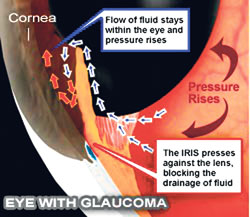
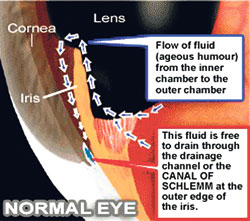
Courtesy uniteforsight.org

Explaining that in glaucoma, (except in the rarer acute angle closure glaucoma) unlike in other eye diseases, there are no symptoms, she says: "There is no pain or redness and patients don't realize they are losing their vision because once again in other conditions there is central loss of vision but here it comes from the periphery to the centre. That is why patients will not know they are carrying the disease until the advanced stages. It also doesn't affect both eyes equally."

Dr. Fonseka says patients manage, even with the peripheral vision of one eye being lost due to glaucoma, because the other eye is okay. "People cope without realizing the gravity of the problem. In the west, a common complaint of drivers suffering from glaucoma is that they seem to be scraping the sides of their vehicles," she says, adding that realization dawns only when it advances to "tunnel" or worse-still "keyhole" vision.

Warning
Because of excessive usage of steroids, all patients on steroid eye drops or oral steroids for any other medical condition must be monitored for the development of steroid induced glaucoma.

Glaucoma, which mainly affects the aged, is seen in a shocking 4-5% of the population worldwide, MediScene learns, and with Sri Lanka heading towards an ageing population this should be one disease, which needs much attention.

Grouping adult glaucoma into "acute" which is rare and has symptoms such as eye pain, halos around lights at night, blurred vision due to sudden high eye or intraocular pressure, Dr. Fonseka underlines the fact that "chronic" glaucoma is more worrisome and is the most common form of glaucoma.

When should adults start worrying about glaucoma?

Just after 40, when you find it difficult to read without glasses (presbyopia). That is the ideal time to check out whether you are coming in for glaucoma, says Dr. Fonseka, explaining that as awareness seems to be the biggest problem not only eye doctors but also opticians are now being trained to check the back of the eye, the head of the optic nerve, to catch the early signs of glaucoma.

"If, however, there is a family history of glaucoma," reiterates Dr. Fonseka, "regular check-ups before 40 are a must. When a family member is diagnosed with glaucoma, every sibling and every child of that person must get their eyes checked."

What are the causes of glaucoma?

Those days although it was believed that glaucoma was caused by high intraocular pressure, and it was essential to have high intraocular pressure to diagnose glaucoma, at present it is only an important risk factor. This is because a larger percentage of glaucoma patients have been found to have normal intraocular pressure ie. normal tension glaucoma, explains Dr. Fonseka.

Hence the most important danger sign is "glaucomatous cupping" and thinning of the nerve fibre layer of the retina. That's why when screening the population it is not only important to check eye pressure and the visual field but also vital to look at the optic nerve head itself, she says.

According to a hospital-based survey carried out by Dr. Fonseka, 60% of all glaucoma patients had normal tension (pressure) glaucoma while only 32% had high tension in the eye (causing open-angle glaucoma). Eight percent had angle-closure glaucoma.

Surgery to create new drainage area (hides under upper eyelid) "Bleb," new drainage area, after surgery. (Courtesy marineyes.com)

When eye pressure rises, the right amount of fluid cannot drain out of the eye and thus the eye's drainage canals get clogged. If the opening of the drainage canals are clogged it causes angle-closure or acute glaucoma, while in other cases though the entrances to the drainage canals are clear, the clogging occurs inside resulting in open-angle glaucoma, MediScene learns.

Even the visual field checks may come a little too late because by the time glaucoma is diagnosed through visual field tests, the victim may have already lost 40-50% of optic nerve fibres.

The optic nerve combines the eye to the brain and carries images between them. It is like a cable with 1 or 1.5 million separate wires or nerve fibres connecting both. Like people shed a certain number of hairs daily, there is a slow progression of death of the nerve fibres in normal life. This is natural, says Dr. Fonseka, adding that usually a 70-year-old will have only 70% of nerve fibres.

"But in glaucoma patients there is an exaggerated loss of optic nerve fibres. There is no cure for loss of nerve fibres but we can slow-down this exaggerated loss through early detection and treatment," she says.

How is glaucoma treated?

The first line of treatment is medication in the form of eye drops. "Prostaglandin analogues, a powerful drug, though very expensive, has revolutionized the management of glaucoma by bringing down intraocular pressures to very low levels and can preempt surgery," she says.

If it fails to achieve the targeted eye pressure, which is determined on a one-to-one basis, then laser treatment may be an option. The gold standard, of course, is filtration surgery where an artificial passage is created in the eye to drain fluid and bring about normal eye pressure," she adds.

The treatment is to retard further loss of vision which otherwise would lead to blindness, explains Dr. Fonseka, stressing that the essential requirements from the patient would be compliance and lifelong follow-up. Then patients can lead near-normal lives. "Don't ever stop the treatment," she advises.

The risk factors:

  • Raised intraocular pressure
  • Age
  • Race
  • Myopia
  • Diabetes
  • High blood pressure or hypertension


-- The Sunday times - LK

Facebook > Fans

NASA Breaking News - Feed

Astronomy.com - News

Space Wire Top Stories Feed

Today"s Highlights Of The World

Today in History

Birthdays Today

NASA Image of the Day - Feed

NASACast Audio , To listen, Click - Feed

Medicine Net Daily News - Health News

Health News from Medical News Today - Feed

The New York Times

Crestock Daily Free Image

BBC News | Science/Nature | World Edition

BBC News | Health | World Edition

BBC News | UK | World Edition

BBC News | Asia-Pacific | World Edition

BBC News | Africa | World Edition

BBC News | Middle East | World Edition

BBC News | Europe | World Edition

BBC News | Business | World Edition

BBC News | Entertainment | World Edition

BBC News | Technology | World Edition

Sky News | World News | First For Breaking News

CNET News.com

PC World: Latest Technology News

Newsweek Top News

Guardian UK - Unlimited